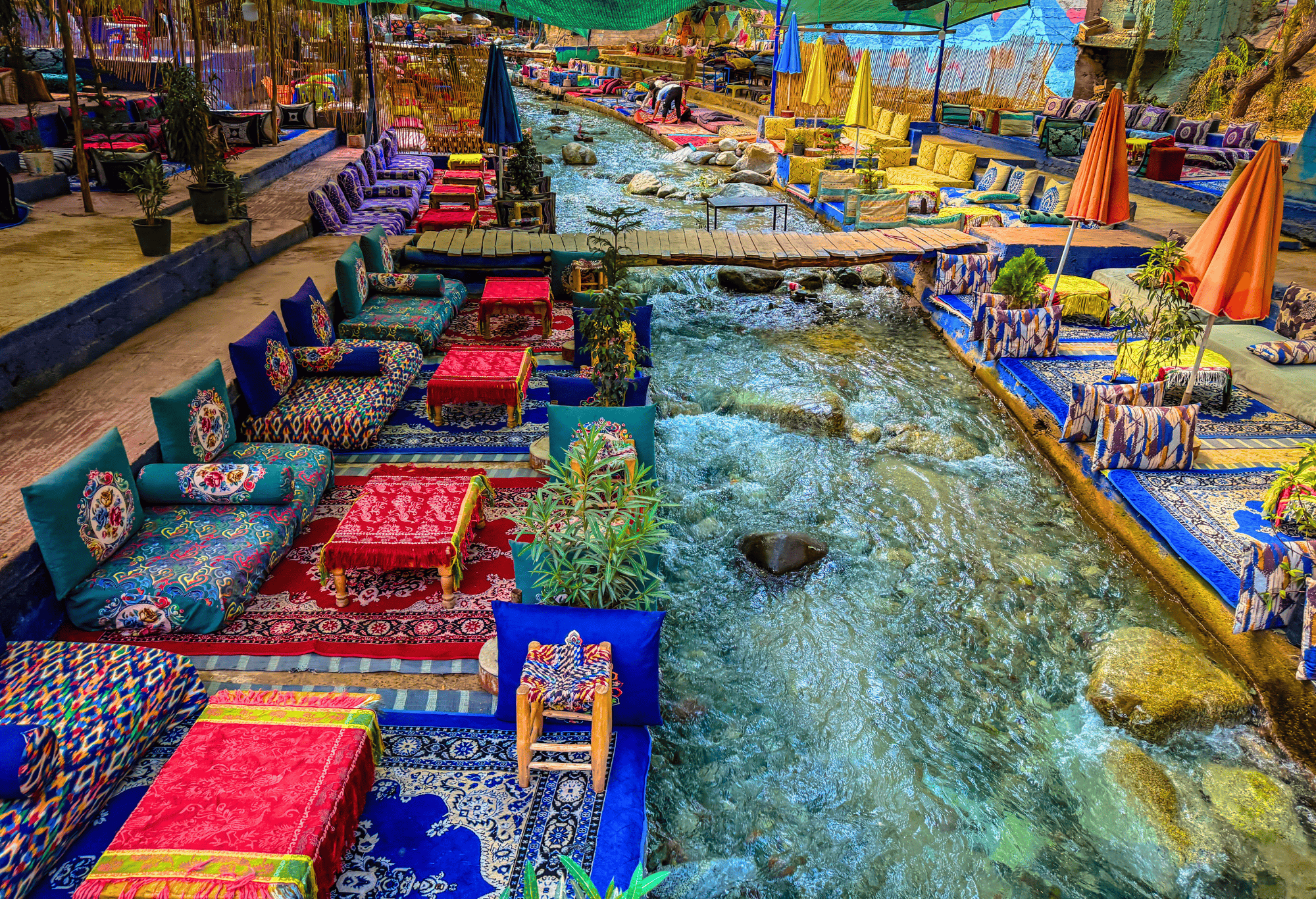
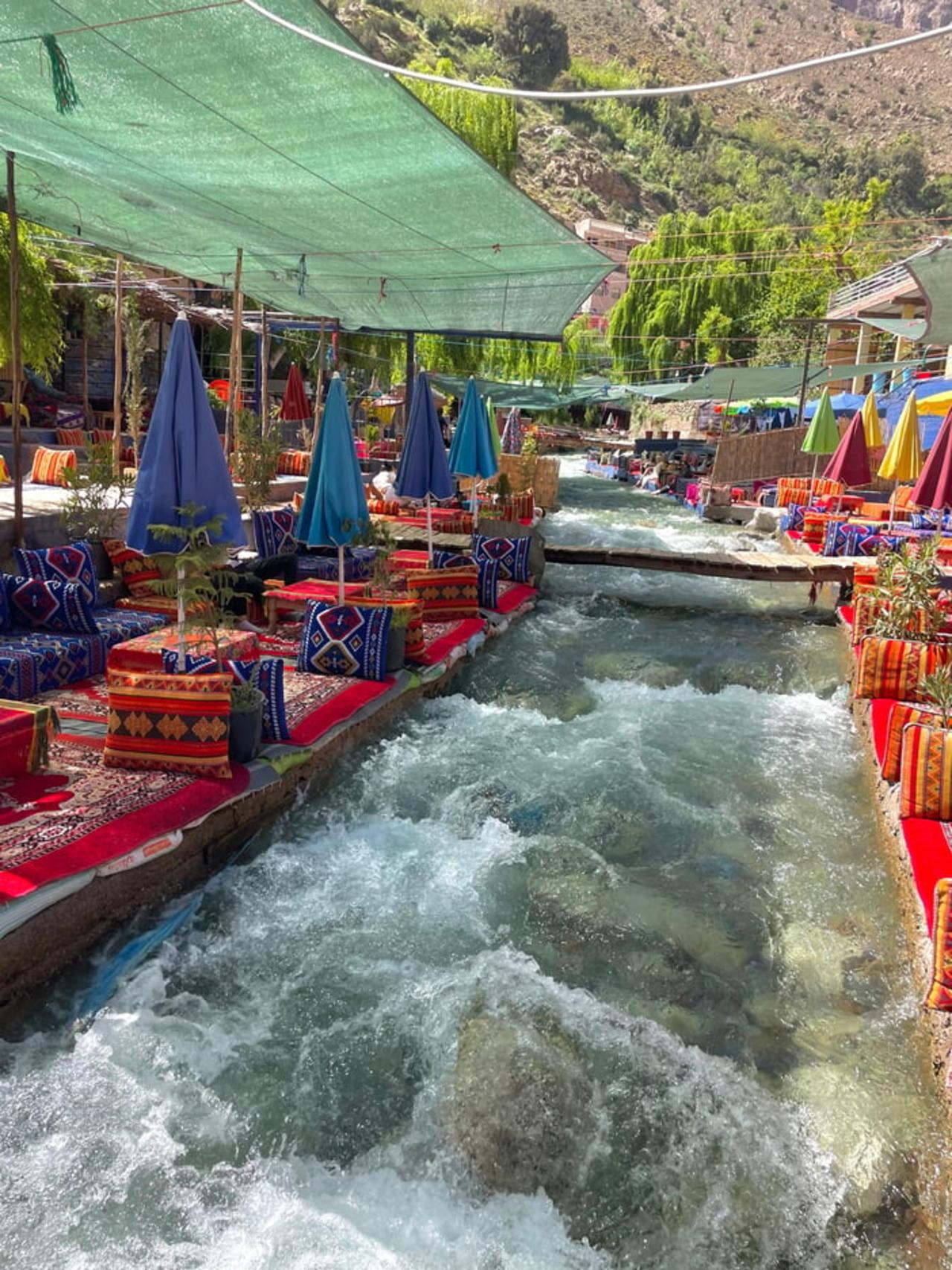
7 hr
Ourika Valley & Atlas Mountains Day Trip
Discover cascading waterfalls, Berber villages, and argan oil traditions in the Atlas foothills
Reserve
Hand-picked by our editors — only the best 5 excursions from 47 reviewed.
Verified partners for every tour, free cancellation where available, and instant confirmation on every booking.
7 hr
Discover cascading waterfalls, Berber villages, and argan oil traditions in the Atlas foothills
Reserve
9 hr
Trek through High Atlas villages, meet local families, and enjoy traditional hospitality in the mountains
Reserve
7 hr
Journey into the High Atlas to explore Berber villages, hike to seven cascading waterfalls, and share mint tea with local families
ReservePrices from verified partners. Availability updates in real time at checkout. Free cancellation policies apply where shown.
The landmarks, rooms, and views travelers on this tour remember — all visible on a single visit.
Highest mountain view accessible via hiking trails from Imlil.
Seasonal cascade found on hiking routes near the village.
Local hub for learning about indigenous mountain traditions.
Panoramic vantage point overlooking the lush valley floor.
Imlil serves as a rugged base for mountain trekkers, while the Ourika Valley provides a more leisurely landscape of cascading water and artisan shops. These day trips from marrakech to atlas mountains tours allow visitors to contrast high-altitude wilderness with accessible valley scenery.
| Feature | Top pick Imlil | Ourika Valley |
|---|---|---|
Primary Activity |
Hiking and mountaineering | Waterfall sightseeing and dining |
Physical Intensity |
High (mountain terrain) | Low to moderate |
Vibe |
Rugged and authentic | Commercial and social |
Main Attractions |
Toubkal peak trails | Setti Fatma waterfalls |
Best For |
Serious hikers and nature seekers | Families and casual day trippers |
| See tickets → |
Verdict: Choose Imlil for a focused mountain trekking experience or the Ourika Valley if your day trips from marrakech to atlas mountains tour requires a less strenuous pace.
Choose your ticket, select your date, and reserve in under two minutes. Secure checkout handled by our verified partner.
Instant confirmation by email, with a mobile voucher you can save offline. No printing, no queuing at a collection desk.
Arrive at the entrance, show your voucher on your phone, and walk in. Most tickets include priority or skip-the-line access.
Practical details for your visit straight from our verified partners — hours, access, rules, and how to get there.
Marrakech
Primary meeting point for departures
Private transport via R203 road takes 90 minutes.
Grand taxi from Marrakech offers direct travel.
Modest clothing is encouraged in rural Atlas Mountain villages. Sturdy hiking boots are essential for uneven terrain during day trips from marrakech to atlas mountains.
Secure your belongings in a daypack while exploring Imlil. There are no centralized security checkpoints for village entry during your day trips from marrakech to atlas mountains.
Photography is permitted throughout Imlil. Always ask for permission before capturing portraits of local residents while on your day trips from marrakech to atlas mountains.
Most trails in Imlil are unpaved and steep. Day trips from marrakech to atlas mountains typically involve walking on rugged mountain paths.
Cellular coverage is inconsistent in the valleys. Download offline maps before starting day trips from marrakech to atlas mountains.
Children can participate in light walks near Imlil. Assess the difficulty of mountain trails before embarking on day trips from marrakech to atlas mountains.
Traditional tajine is widely available in local guesthouses. Carry bottled water as high altitude increases dehydration during day trips from marrakech to atlas mountains.
Pets are generally not permitted on guided transport vehicles. Check specific operator policies for day trips from marrakech to atlas mountains.
Imlil serves as a base for Mt. Toubkal expeditions. Plan your logistics carefully for day trips from marrakech to atlas mountains.
Best time to go, insider tips, nearby landmarks, and the cancellation fine print — flip through to skim what matters to you.
How crowds, weather, and events shift across the year.
March to May brings pleasant temperatures and blooming valleys for mountain tours.
June to August offers clear skies but requires an early start for hiking.
September to November provides crisp air for mountain trekking.
December to February features snow; professional gear required for high peaks.
Small details that turn a good visit into a great one.
Arrive between 08:00–10:00 to maximize hiking time before the afternoon sun.
Dress modestly when interacting with villagers during your day trips from marrakech to atlas mountains.
Keep small denominations of MAD for local artisan purchases.
Drink more water than usual due to the elevation.
Hire a licensed mountain guide for remote area trekking.
Non-bookable sights within a short walk — free to visit, easy to pair.
Expansive protected area for high mountain hiking.
Traditional settlement with panoramic valley views.
Flexible, no hidden fees.
Full refunds are provided for cancellations made at least 24 hours in advance. No entrance fee of 0 MAD is applicable to the village itself.
Hand-picked options within walking distance — pick a district for vibe, or a specific hotel for convenience.
Renowned eco-lodge overlooking the valley.
Authentic family-run mountain lodging.
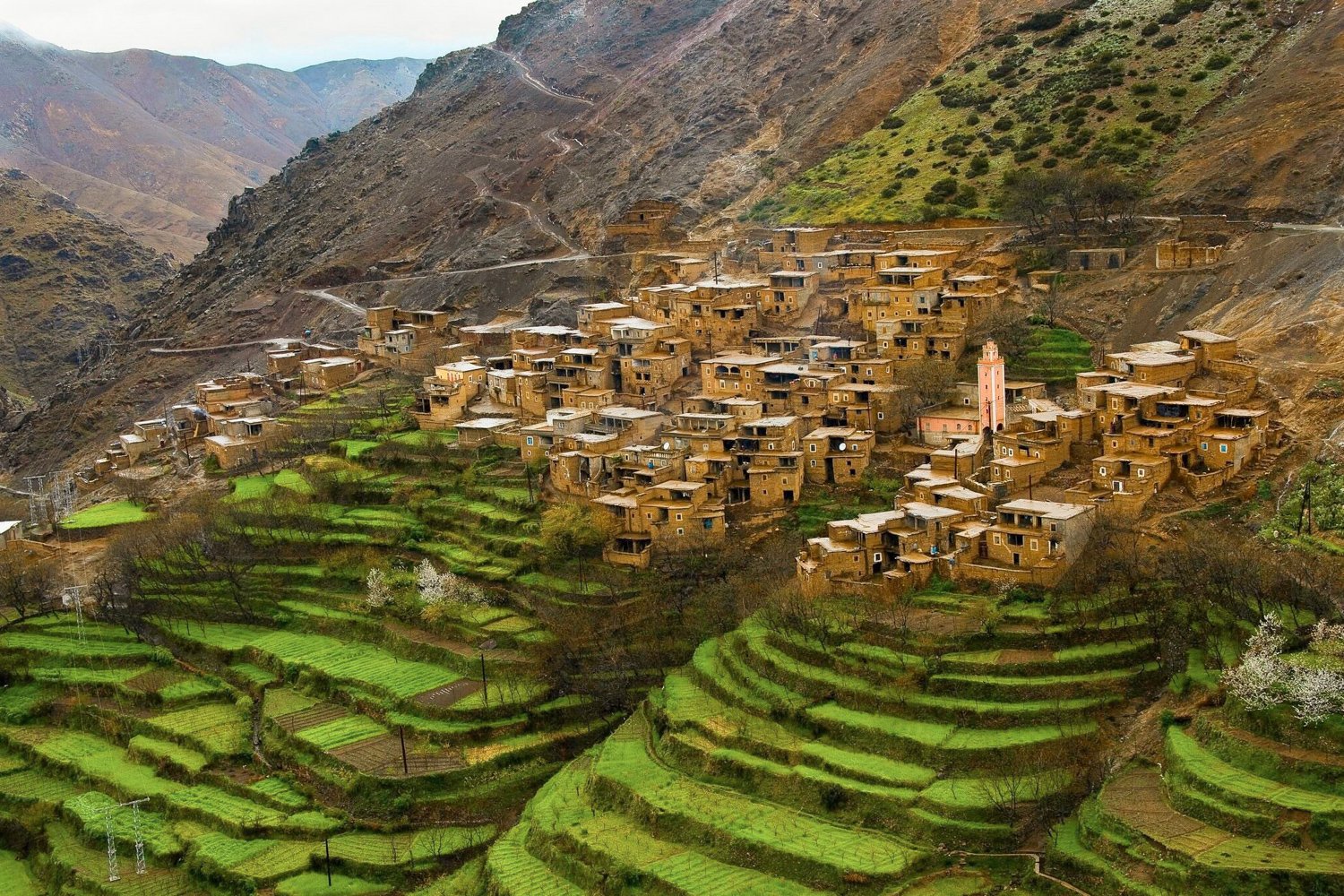
The High Atlas forms a 2,500-kilometre spine across Morocco, its central massif rising to 4,167 metres at Jebel Toubkal, the tallest summit in North Africa. Sixty-seven kilometres south of Marrakech, the asphalt highway climbs through the Moulay Brahim gorge and ends at Imlil, a stone-and-timber village at 1,740 metres that serves as the trailhead for most High Atlas expeditions. The transition is abrupt: red city dust gives way to juniper scrub, terraced barley fields, and the scent of wild thyme carried on thin air. Day trips from Marrakech to Atlas Mountains became a structured tourism product in the 1980s, when European trekking agencies began chartering vans to Imlil and hiring Berber guides for single-day circuits. Before that, the valleys sustained subsistence farming — walnut orchards, apricot groves, irrigation channels hand-carved from granite. The villages remain Berber-speaking; Tashelhit and Tamazight dialects dominate, and the rhythm of life follows the agricultural calendar rather than the tour-bus schedule. Most houses are built from rammed earth and chestnut beams, their flat roofs doubling as drying platforms for corn and medicinal herbs. The Ourika Valley, thirty-two kilometres east of Imlil, offers a gentler gradient. Seven named waterfalls punctuate the valley floor, the highest cascading forty metres over travertine ledges. The trail to Setti Fatma, the uppermost waterfall, passes through groves of Atlas cedar and clusters of corrugated-metal tea stalls that serve mint tea in hand-blown glasses. The valley's microclimate supports vegetation absent from the arid plains: wild rose, oleander, and pockets of holm oak. Atlas Mountains tours typically include a communal Berber lunch — tagine cooked over a wood fire, flatbread baked in a clay oven, olives cured in salt and lemon. Guides are drawn from the local cooperative system, which rotates assignments among registered families to distribute income. The trails themselves are ancient: seasonal transhumance routes used by shepherds moving flocks between summer pasture at 3,000 metres and winter valleys. Stone cairns and faded paint marks indicate the main paths, but many side canyons remain unmapped. Camel treks operate on the lower slopes, where the terrain flattens into scrubland. The camels are single-humped dromedaries, descendants of caravan stock, their gait slower and more deliberate than the mules used for higher ascents. The experience is ceremonial rather than practical — a fifteen-minute circuit along a red-dirt track — but it satisfies the narrative expectation of mountain travel. The real infrastructure is the network of riads and guesthouses that now line the Imlil road, built to accommodate the sixty thousand annual visitors who use the village as a base for Toubkal attempts or single-day hikes into the adjoining valleys.

"The transition is abrupt: red city dust gives way to juniper scrub, terraced barley fields, and the scent of wild thyme carried on thin air."
A step-by-step walkthrough of the visit — what you'll see, how long each stage takes, and the details that matter.
You leave Marrakech before eight, the city's ochre ramparts shrinking in the rear window as the van climbs toward the Haouz Plain. Within forty minutes the road narrows, enters the Moulay Brahim gorge, and begins a series of hairpin bends that lift you past roadside stalls selling walnuts and clay tagines. At Imlil you step out into cool air and meet your guide, a Berber speaker who greets you in French or English depending on your party. The village sprawls across a steep slope: mules tied to olive trees, the sound of water channeled through stone sluices, children kicking a soccer ball on a terraced field. You begin the hike along a footpath that follows an irrigation canal, the trail wide enough for single file. After thirty minutes you reach the first hamlet — a cluster of five houses, smoke rising from a clay oven, a woman spreading apricots on a rooftop to dry. The guide explains the crop rotation system and points out wild herbs growing between rocks: thyme, rosemary, wormwood. At the highest point of the loop, roughly two hours in, you pause for lunch in a family home converted to a guesthouse. Tagine, couscous, mint tea. The return descent takes ninety minutes, retracing your steps through juniper groves and past terraced barley. You reach Imlil by mid-afternoon, the van waiting to carry you back to Marrakech before the evening call to prayer.
Imlil is accessible 24 hours a day, 00:00–23:59.
Entry to Imlil is 0 MAD, though local trail fees may apply to specific paths.
The best arrival window is 08:00–10:00 to avoid midday heat.
You do not need entry tickets for Imlil, though tours require booking.
Yes, families often enjoy Imlil, provided trails match the children's fitness level.
Yes, bring a light daypack for your gear during your mountain trip.
Wear comfortable layers and sturdy hiking boots for the mountain terrain.
Public transport or taxis are available for the journey to Imlil.
Many guesthouses in Imlil serve authentic local Berber cuisine.