
English| EUR
Suggested for you
More currencies
Choose a language
Imlil sits 64 kilometers south of Marrakech, at the end of a winding mountain road that climbs from the plains into the High Atlas. The journey takes between 90 minutes and two hours depending on the method you choose. This guide covers shared taxis, private transfers, rental cars, and organized shuttles, with departure points, schedules, and current fares.
Quick answer
Self-drive is possible year-round on paved Route 4017, though winter snow above Asni can require caution.
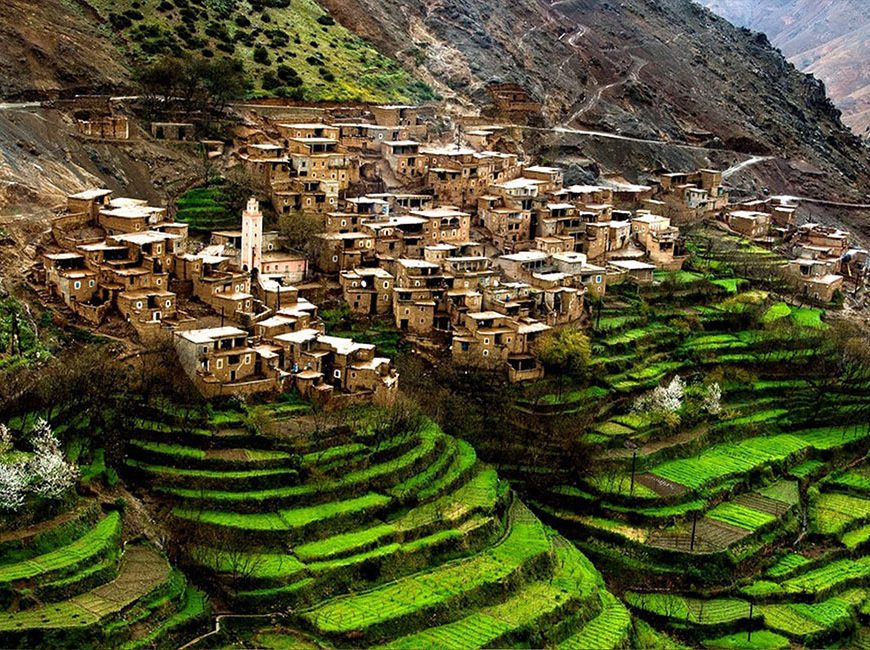
The road to Imlil is the only paved route into the Toubkal massif, and every trekker, climber, and day visitor traveling from Marrakech to the valley uses the same corridor. Route 4017 leaves the city's southern edge, crosses the Haouz plain, and begins its ascent at Tahanaout, winding through terraced slopes and walnut groves before reaching Asni at 1,150 meters. From Asni, the road narrows and climbs another 17 kilometers to Imlil at 1,740 meters, where the asphalt ends and mule tracks begin. Four transport methods serve the route. Shared grand taxis are the most common: cream Mercedes sedans that wait at Bab Doukkala until six passengers fill the seats, then depart for Imlil without a fixed schedule. Many operators include a stop in Asni for provisions or a café break. Driving yourself is straightforward outside winter. Route 4017 is fully paved and well-marked, though the section above Asni includes hairpin turns and occasional rockfall. Fuel stations in Tahanaout are the last reliable source before Imlil. Parking at the village entrance costs nothing, but space fills quickly between 09:00 and 11:00 when organized groups arrive. Some guesthouses offer reserved spaces if you confirm in advance. Organized shuttles operate as part of trekking packages or guided day trips, typically departing Marrakech hotels between 07:00 and 08:00 and returning by 18:00. These services bundle transport with a guide or lunch reservation, and they handle logistics for groups who prefer not to negotiate taxi fares or navigate independently. The village is open year-round as the gateway to Toubkal National Park, with no entrance fee or access restriction. Reaching Imlil before 10:00 allows time to secure lodging, arrange a mule, or begin a trek before the midday heat settles into the valley.
“The road to Imlil is the only paved route into the Toubkal massif, and every trekker traveling from Marrakech to the valley uses the same corridor.”
Travelers deciding how to reach Imlil must weigh the personalized convenience of private transfers against the budget-oriented nature of shared grand taxis. This comparison outlines the practical differences between these two primary transport modes.
| Private Transfer Direct service Recommended | Shared Grand Taxi Multi-passenger service | |
|---|---|---|
| Transport Mode | Private vehicle | Shared vehicle |
| Flexibility | Direct departure from accommodation | Fixed routes with wait times |
| Cost Structure | Per-vehicle rate | Per-seat rate |
| Departure Reliability | Scheduled in advance | Departures require vehicle capacity |
| Comfort Level | Dedicated space and climate control | High-occupancy shared seating |
Verdict: Choose a private transfer for door-to-door convenience and schedule control, or opt for a shared grand taxi for a cost-effective, local travel experience.
Travel costs to Imlil vary significantly based on whether you opt for shared local transit or private vehicle hire. Budgeting should account for both transportation and daily necessities like meals.
How to spend less
Prepare these essentials before leaving Marrakech to avoid delays or discomfort on arrival.
Everything you need to know about how to get from marrakech to imlil
Travelers typically use shared grand taxis or private transfers to reach the village from the city. These vehicles depart from designated stations and navigate the winding mountain roads of the High Atlas.
To reach the village, you can find grand taxis at the main transport hubs in the city. Confirm the destination clearly before departure, as these vehicles usually wait until they are full before leaving for the mountains.
Yes, independent travel is possible, though many visitors opt for organized transport for convenience. The journey takes you from the bustling city into the heart of the national park region.